
Note: This article was last updated on August 19, 2025.
Key Takeaways
-
Business-to-Business-to-Consumer is a business model where businesses serve end customers through a third party.
-
B2B2C models benefit the manufacturer or primary business as they are able to expand their market reach, reduce operating costs, lower customer acquisition costs, and improve customer acquisition by leveraging partners' platforms and networks, as well as have access to deeper customer insights.
-
However, B2B2C is complex and will require infrastructure modifications in order to be successful.
You’ve heard of B2B. You’ve heard of B2C. But how much do you know about the B2B2C model? Many companies arrange themselves around either a B2C or B2B model. Although these models are still highly relevant in today’s business landscape, another option is becoming more popular in the age of digital tools and mounting consumer expectations: B2B2C.
The B2B2C business model combines the benefits of each approach, allowing a B2B company to leverage the B2C experience and reach a larger customer base. Though taking cues from more familiar models, B2B2C introduces new considerations to the business world.
Let’s explore what a B2B2C strategy is, what benefits these businesses enjoy, and what types of challenges they might face.
What is Business-to-Business-to-Consumer (B2B2C)?
B2B2C, or business-to-business-to-consumer, is an business model where a company partners with another company to access a wider consumer market or offer services that would be difficult or costly to provide independently. In this arrangement, two businesses work together: one business supplies a product or service to another, which then delivers it to the end consumer. The process often involves multiple sales channels and distribution channels, allowing companies to reach consumers through various avenues and optimize their sales channel strategy.
This partnership is mutually beneficial, as it enables companies to expand their customer base, enhance the customer experience, and unlock new revenue streams.
For example, a grocery store may collaborate with a delivery service to offer online ordering and home delivery, providing customers with a convenient and seamless shopping experience. By leveraging each other’s strengths, B2B2C models enable companies to reach more customers and deliver services that might otherwise require significant investment or resources.
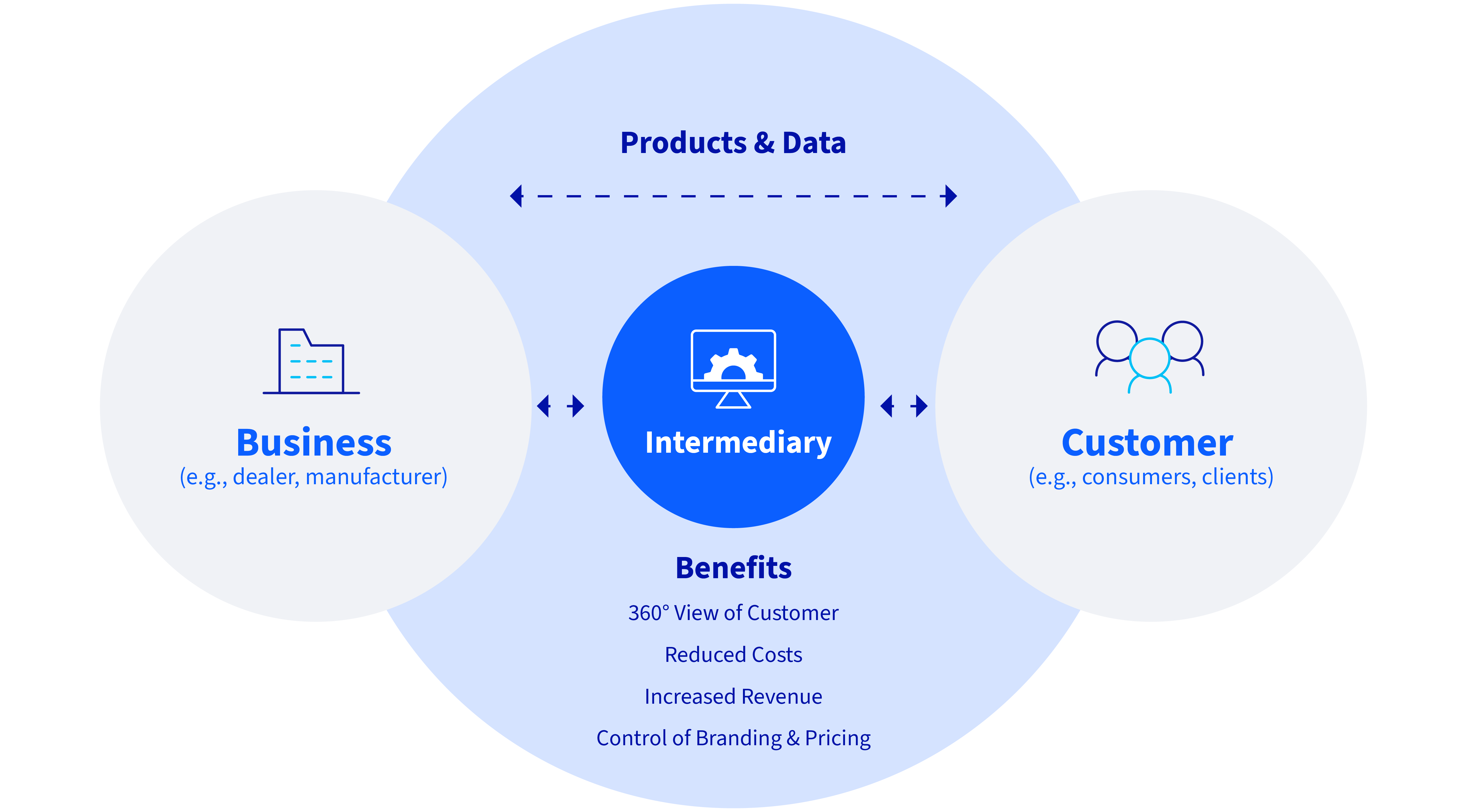
Here’s a closer look at how that compares to other models:
B2B
In the traditional B2B experience, one company markets products and services to another. From software companies to office technology suppliers to wholesale retailers, B2B eCommerce encompasses a wide range of transactions in the supply chain.
B2C
A B2C eCommerce model allows a business to interface directly with the consumer. Most consumer brands use this model. The only difference between this and a traditional B2C approach is the form of transactions, which occur online via websites or apps instead of in a physical store — though a B2C company can use both eCommerce and brick-and-mortar strategies.
B2B2C
The business-to-business-to-consumer (B2B2C) model is a dynamic business model that blends the strengths of both business-to-business (B2B) and business-to-consumer (B2C) approaches. In a B2B2C model, one business partners with another business to deliver products or services directly to consumers, creating a bridge between the business world and the end customer. This hybrid model has surged in popularity as companies seek to provide a seamless customer experience, drive revenue growth, and streamline operations. B2B2C models are especially prevalent in industries like ecommerce, retail, food and beverage, and financial services, where collaboration between business partners enables companies to reach more customers and deliver greater value. By combining the reach and resources of two businesses, the B2B2C model offers a powerful way to meet evolving consumer expectations and stay competitive in today’s market.
In the B2B2C commerce model, there are three parties involved: the primary business or brand (e.g., a dealer or manufacturer), the intermediary—often a service provider who acts as a middleman—and the final customer (the end consumer). Consumers are fully aware they’re buying from the primary brand; the purpose of the intermediary company or service provider is to provide more direct service at customer touchpoints, creating a mutually beneficial situation for both businesses and the end consumer.
Managing the customer relationship and customer relationships is crucial in B2B2C, as both the primary business and the intermediary may interact directly with the end customer. This shared customer ownership requires careful coordination to ensure a consistent and positive experience across all touchpoints.
Key Characteristics of B2B2C Models
B2B2C models stand out from traditional business models due to several defining characteristics:
-
Partnerships Between Two Businesses: At the core of B2B2C models is a strategic partnership between two businesses working together to deliver products or services to consumers.
-
Seamless Customer Experience: These models prioritize creating a smooth and integrated customer journey, often making it easy for consumers to access products or services through familiar channels.
-
Use of Online Platforms and Digital Channels: B2B2C businesses frequently leverage online platforms, mobile apps, and digital marketplaces to reach and engage consumers efficiently.
-
Strong Business-Consumer Relationships: There is a focus on building lasting relationships with end consumers, often through personalized service and direct communication.
-
Personalized and Targeted Marketing: By combining resources and data, B2B2C models enable companies to deliver tailored marketing messages and offers to specific consumer segments.
-
Data-Driven Decision Making: The use of analytics and consumer data is central to optimizing operations and enhancing the customer experience. In the B2B2C model, leveraging data not only improves the end consumer’s experience but also strengthens the partnership between businesses, ensuring long-term success in a competitive marketplace.
Companies like Instacart and Uber Eats exemplify these characteristics by partnering with local businesses to deliver food and other products directly to consumers, using online platforms to facilitate seamless transactions between two businesses and the end customer.
Examples of B2B2C Business Models
While B2B and B2C models may be easy to spot, it’s less common to see a B2B2C company in the current marketing and commerce landscape. Here are a few examples of companies using the B2B2C model:
Instacart
Instacart is a startup B2B2C platform that mimics the grocery shopping experience digitally. Because traditional grocery stores haven’t typically undergone the digital transformation necessary to offer this service, Instacart acts as a platform partner and go-between. The resulting B2B2C model allows Instacart to leverage the brand recognition, existing customer base, and inventory of grocery stores, while the grocery stores benefit from Instacart’s digitized customer experience.
Pladur
Pladur, the leading drywall provider in Spain, has a B2B2C eCommerce platform as a competitive differentiator. Employees, distributors, and customers all use the same solution, enabling simple purchase experiences, connected logistics, and manufacturing management, resulting in significantly reduced lead times in order fulfillment processes.
Tuff Shed
Tuff Shed, a manufacturer of storage sheds and garages, has stores across the U.S. Through a B2B2C partnership with national retailers such as Home Depot, the individual consumer can access Tuff Shed’s online product builder through devices located in chain stores. This approach expands Tuff Shed’s reach to people who shop at these national retailers while allowing Tuff Shed to maintain branding and customer data collection.
AZA Finance
Supporting more than 115 countries, AZA Finance has a simple goal: to “make it easier to do business in Africa.” This B2B2C partner acts as the middleman between other companies and their consumers, offering financial technology solutions spanning multiple currencies to enable simpler international commerce.
Benefits of a B2B2C Relationship
As customer expectations grow more complex, companies struggle to scale operations and manage orders. To address new challenges, many B2B businesses choose to partner with others through a B2B2C model.
| B2B2C Benefits | |||
|---|---|---|---|
|
|
||
|
|
||
|
|
